
What a Technician Finds on a Typical Balance Call
A common call starts with "my opener sounds like it's struggling" or "the door reverses halfway up for no reason." On the truck ride over, the guess is usually right: the door is out of balance, and the opener has been quietly compensating for months. Pull the release cord and lift the door by hand, and it drops like a stone or shoots upward on its own. That imbalance means the springs aren't carrying their share of the weight anymore, so the opener's motor, gears, and drive belt are doing work they were never built to do.
This shows up a lot in homes with original torsion springs that have been cycling through inland heat swings and winter rain for years. Spring steel fatigues faster with repeated temperature and humidity changes, and once tension drops even slightly, the opener takes on the slack without anyone noticing until it starts grinding, slowing down, or tripping the safety reversal.
What an Unbalanced Door Does to the Opener
The opener's motor is sized to lift a door that's properly counterbalanced by its springs — it's meant to guide the door, not hoist it. When the springs lose tension or wear unevenly, the opener has to supply the missing force every single cycle. Over time that means:
- Faster wear on the drive gear and sprocket, which are common failure points on aging openers
- A trolley and belt or chain working under more tension than designed, leading to slipping or snapping
- The circuit board logic misreading resistance, which can cause the door to reverse unexpectedly mid-cycle
- Shortened motor life overall, since the opener is effectively doing double duty
None of this is a build quality issue — it's a balance issue wearing out a healthy opener early.
Tools You'll Need
- Step ladder (for reaching the release cord if it's high)
- Work gloves
- A flashlight for inspecting springs and cables
- Nothing else — this test is meant to be done without touching the spring system
How to Test Garage Door Balance
- Close the door fully. Start from a closed position so you're testing the whole range of travel.
- Disconnect the opener. Pull the red emergency release cord so the door is running on springs alone, not opener power.
- Lift the door by hand, slowly. Use both hands and lift to about waist height, then let go.
- Watch what happens. A balanced door will stay roughly in place or drift down very slowly. A door that drops fast or shoots up on its own is out of balance.
- Repeat at the halfway and three-quarter points. Imbalance isn't always even across the full travel — a door can feel fine near the bottom and heavy near the top, which points to uneven spring wear rather than a single failed spring.
- Look, don't touch. With the flashlight, check the springs above the door for visible gaps in the coil, rust streaks, or one spring sitting noticeably looser than the other. Check cables for fraying near the bottom brackets.
- Reconnect the opener and run one full cycle. Listen for grinding, note any hesitation, and watch whether the door reverses before fully closing.
What a Homeowner Can Safely Do
Everything above is safe for a homeowner: the manual lift test, the visual inspection, and listening for opener strain. You're never touching the springs themselves or adjusting tension — just observing how the door behaves.
What Needs a Technician
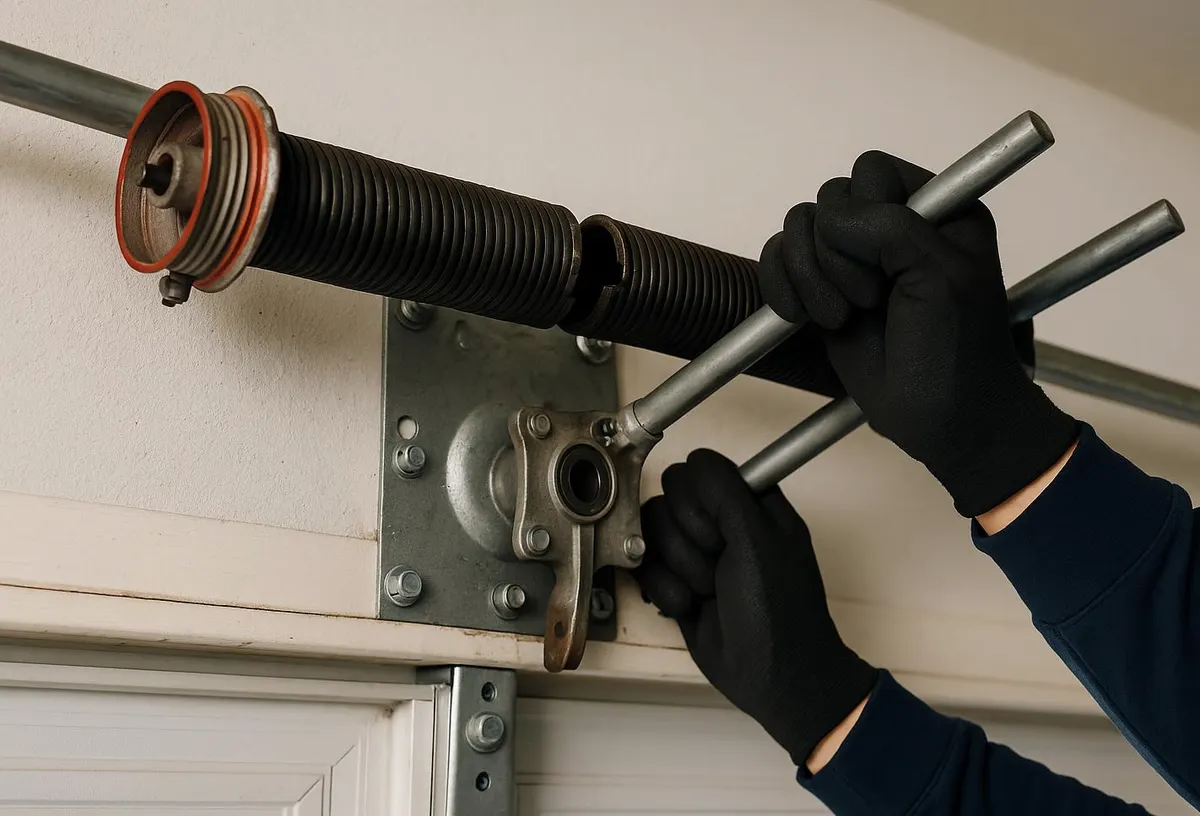
Torsion springs are wound under extremely high tension, and adjusting, repairing, or replacing them requires specific bars and a clear understanding of how much force is stored in that coil. This isn't a job for a ladder and a wrench — it's one of the more common causes of serious garage injuries when attempted without the right tools. The same goes for extension springs, cables under tension, and anything involving the torsion tube itself. If your test shows an imbalance, that's the signal to stop and call someone, not to start adjusting.
When to Call Fairfield Garage Door
If your balance test shows the door dropping fast, lifting on its own, or behaving differently at different points in the track, it's time to call. We'll run a full diagnostic, measure spring tension properly, and handle Spring Replacement if the coils are worn or mismatched. If the opener itself shows signs of damage from months of overwork — stripped gears, a slipping belt, inconsistent reversal — we'll also check whether Garage Door Opener Repair or a replacement unit makes more sense than continuing to patch a motor that's been carrying extra load. Catching this early usually costs less than waiting for the opener to fail outright.
If your garage door in Fairfield, CA feels heavy, uneven, or louder than it used to be, give Fairfield Garage Door a call — we'll test the balance, check the opener, and get it running the way it's supposed to.